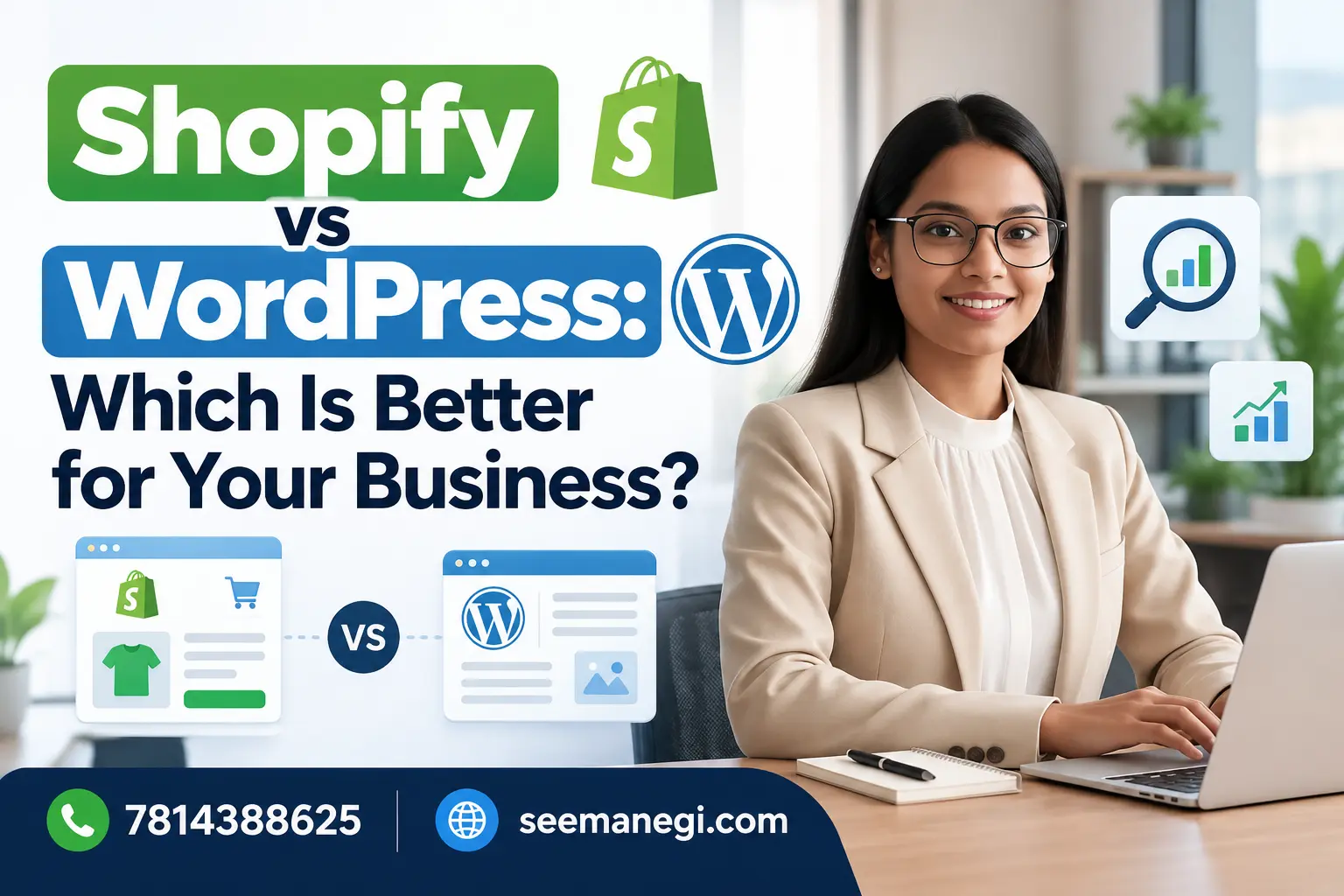
Choosing the right platform is one of the first important decisions when building a business website. If you are planning to launch an online store, promote professional services, or grow an existing brand, you have probably compared Shopify vs WordPress.
Both platforms can support business growth, but they serve different needs. Shopify focuses on simplifying online selling, while WordPress offers extensive flexibility for websites, blogs, and customised digital experiences. When combined with WooCommerce, WordPress can also power a complete online store.
I’m Seema Negi, a freelance web developer working with Shopify and WordPress websites. Through my work with business websites, online stores, responsive designs, and customisation, I understand why choosing a platform should involve more than comparing features. Your budget, technical requirements, customers, and long-term plans all matter.
In this guide, I’ll explain the differences between Shopify and WordPress to help Indian business owners make a practical decision.
What Is Shopify?
Shopify is a hosted eCommerce platform designed to help businesses create online stores and manage products, orders, payments, and inventory from one dashboard. Hosting and SSL security are included, reducing the need to manage server infrastructure independently.
Shopify is particularly suitable for D2C brands, clothing businesses, beauty brands, home decor stores, and product-based startups that want to sell online without handling every technical detail.
Its key advantages include:
- Easy eCommerce management for products, collections, orders, and inventory.
- Mobile-responsive themes for customers shopping on different devices.
- Payment gateway integrations for supported providers and markets.
- Shipping and marketing integrations to connect fulfilment and promotional tools.
- Built-in SEO settings for page titles, meta descriptions, URLs, and other essential elements.
Shopify is a strong choice when your primary goal is to sell products and manage daily store operations efficiently.
What Is WordPress?
WordPress is an open-source content management system that lets businesses create websites with extensive control over design, content, and functionality. In this comparison, WordPress means self-hosted WordPress.org, not the separate WordPress.com service.
For online selling, businesses commonly use WooCommerce, an eCommerce plugin that adds product listings, carts, checkout, order management, and other store functionality.
WordPress is suitable for service businesses, consultants, freelancers, agencies, educational websites, publishers, and content-driven brands.
Its main advantages include:
- Greater flexibility for custom website development.
- Extensive blogging and content management capabilities.
- Access to themes, plugins, and custom code.
- Control over hosting and many technical decisions.
- The ability to build business websites with portfolios, service pages, lead-generation forms, and online stores.
However, WordPress requires appropriate hosting, backups, security measures, software updates, and ongoing maintenance.
Read Also: Freelance WordPress Developer In Bengaluru
Freelance WordPress Developer In Hyderabad
Freelance WordPress Developer In Ahmedabad
Freelance WordPress Developer In Chennai
Shopify vs WordPress: Key Differences
The right platform depends on how you intend to use your website.
| Feature | Shopify | WordPress + WooCommerce |
|---|---|---|
| Initial setup | Generally simpler | Requires hosting and configuration |
| Hosting | Included | Purchased separately |
| eCommerce | Built into the platform | Added through WooCommerce |
| Customisation | Themes, apps, Liquid and APIs | Themes, plugins, PHP and custom code |
| Blogging | Built-in blog | Extensive publishing capabilities |
| Maintenance | Most platform infrastructure is managed | Site owner manages or outsources maintenance |
| SEO | Built-in SEO controls and integrations | Flexible SEO settings and plugins |
| Best suited for | Product-focused online stores | Custom, content-led and service-based websites |
Neither platform automatically guarantees better rankings, more sales, or faster performance. Results depend on website quality, content, technical implementation, user experience, and marketing.
Shopify vs WordPress Cost in India
Website cost is an important consideration for startups and small businesses. However, comparing only the subscription price can lead to an inaccurate decision.
How much does Shopify cost?
Shopify uses a subscription-based pricing model. Its India pricing page lists the Basic plan at ₹1,499 per month with annual billing, while monthly billing is listed at ₹1,994 per month. Prices and promotional offers can change, so check the official Shopify pricing page before purchasing.
Additional expenses may include:
- Premium themes or paid applications.
- Domain registration, if purchased separately.
- Developer fees for custom layouts and functionality.
- Payment-provider charges and applicable transaction fees.
- Marketing, shipping, and other business services.
The advantage is that hosting and core store infrastructure are included in the subscription.
How much does WordPress cost?
WordPress software itself is free, but a professional website still requires investment. Typical expenses may include:
- Domain registration and web hosting.
- Premium themes or plugins, if required.
- Website design and development.
- Security, backups, performance optimisation, and maintenance.
- WooCommerce extensions or third-party integrations.
For an Indian business, a basic WordPress website may have relatively low recurring infrastructure costs. A complex WooCommerce store with custom functionality, however, can cost significantly more to build and maintain.
My recommendation: Request a complete project estimate that separates one-time development costs from recurring expenses. Compare the expected cost over 12 months rather than choosing a platform simply because its software appears cheaper.
Which Platform Is Better for SEO?
Both Shopify and WordPress can support an effective search engine optimisation (SEO) strategy. Your results depend on how well the website is structured, how relevant your content is, and whether search engines can crawl and understand your pages.
Shopify SEO
Shopify provides essential SEO features, including editable meta titles and descriptions, canonical tags, XML sitemaps, and support for product-focused content.
It works well for businesses targeting searches such as product names, product categories, and commercial buying keywords.
However, merchants should still manage image optimisation, internal links, collection descriptions, structured data, and page speed carefully.
WordPress SEO
WordPress provides extensive control over content structure, landing pages, blog categories, and technical SEO through plugins and custom development.
It can be particularly useful for content marketing, local SEO, service-based SEO, and long-form educational blogs.
For example, a consultant or freelancer can create separate pages for services, industries, locations, case studies, and frequently asked questions. These pages can target relevant search intent without relying entirely on product pages.
Which is better for SEO? Neither platform is universally superior. WordPress offers more flexibility for certain content and technical requirements, while Shopify makes it easier to manage many eCommerce essentials within one platform.
Payment Gateways, GST and Shipping in India
Indian businesses need to consider local payment methods, fulfilment, and tax workflows before launching an online store.
Shopify and WooCommerce can integrate with supported payment providers, including options for card payments, UPI, and other payment methods, subject to provider availability and account eligibility.
For product-based businesses, also evaluate:
- Payment gateway integration and settlement terms.
- Cash on delivery (COD) and prepaid payment options.
- Shipping partners and order tracking.
- Product tax settings and GST invoicing requirements.
- Inventory management and order notifications.
- Returns, refunds, and customer support workflows.
The important distinction is that choosing a platform does not automatically make your business tax-compliant. GST rates, invoicing, registration obligations, and reporting depend on your products and business circumstances. Verify your configuration with a qualified tax professional when necessary.
Which Platform Should Your Business Choose?
The best choice depends on your business model and how you plan to grow.
Choose Shopify if:
- You want to launch a dedicated online store.
- Your business sells physical products or a product catalogue.
- You need centralised order and inventory management.
- You prefer managed hosting and less server administration.
- You plan to connect marketing, shipping, and sales applications.
Choose WordPress if:
- You need a service-based business website.
- Blogging and organic content marketing are major priorities.
- You require specialised page layouts or custom functionality.
- You want greater control over hosting and technical configuration.
- You need a combination of service pages, lead generation, content, and eCommerce.
For example, a clothing brand selling through social media may benefit from Shopify’s store management tools. A web development consultant building a portfolio, publishing educational blogs, and generating enquiries may find WordPress more appropriate.
Neither choice is permanent in every situation, but migrating platforms later can involve additional costs, URL changes, content transfers, and SEO risks. It is worth evaluating your future requirements before launching.
Why Work With a Shopify or WordPress Specialist?
Selecting a platform is only one part of building a successful website. The design, mobile experience, technical setup, content structure, and customer journey all affect how effectively your website supports your business.
As a freelance web developer, I help businesses evaluate their requirements before choosing a suitable development approach.
If you need professional guidance, explore my work as a Freelance Web Developer In India. You can also learn more about my WordPress development services and Shopify development services.
When comparing a web development consultant, eCommerce expert, freelance developer, or website specialist, look for relevant project experience, transparent pricing, responsive design skills, SEO knowledge, and a clear maintenance plan.
You can also read more about my background and approach or review my available web development services.
A suitable developer should recommend a solution based on your requirements, not simply promote one platform for every business.
Final Verdict: Shopify vs WordPress
So, Shopify vs WordPress: which is better for your business?
Shopify is generally a practical option for businesses focused on selling products online with less infrastructure management. WordPress is often a better fit for businesses that need flexible content publishing, custom service pages, and greater control over their website environment.
For Indian business owners, the best decision comes from comparing total costs, payment and shipping needs, SEO strategy, technical requirements, and future growth plans.
Before investing, write down what your website must achieve in the first year. Then choose the platform that supports those goals without adding unnecessary complexity.
Read Also: Freelance WordPress Developer In India
Freelance WordPress Developer In Mumbai
Freelance WordPress Developer In Delhi
Frequently Asked Questions
1. Is Shopify better than WordPress for small businesses?
Shopify can be better for small businesses focused on online product sales. WordPress may be more suitable for service providers and businesses that prioritise content, custom pages, and flexible website functionality.
2. Which is cheaper, Shopify or WordPress?
WordPress has no software licence fee, but hosting, development, extensions, and maintenance cost money. Shopify has a recurring subscription and may involve additional app and payment-provider expenses. The cheaper option depends on your actual requirements.
3. Which platform is better for Google rankings?
Both platforms can rank well. Relevant content, technical SEO, site speed, mobile usability, internal linking, and backlinks are more important than the platform alone.
4. Can I migrate from WordPress to Shopify?
Yes. Products, customers, orders, and content may be migrated using suitable tools or professional services, although some data requires special handling. Plan URL redirects and SEO checks before switching.
5. Should I hire a freelancer or an agency?
A freelancer can be a practical choice for projects requiring direct communication and flexible development support. An agency may be appropriate for larger projects needing multiple specialists. Compare relevant experience, scope, deliverables, support, and total cost before deciding.